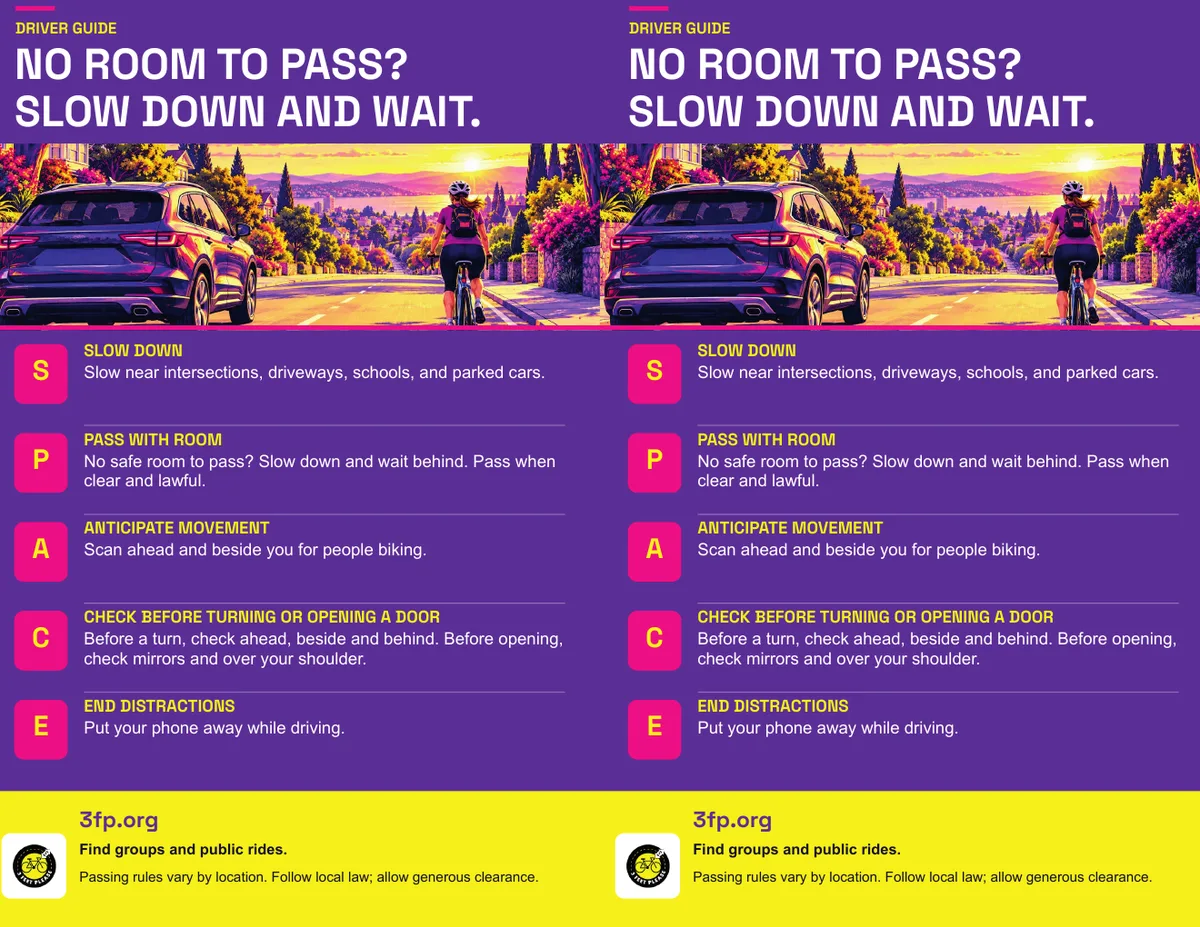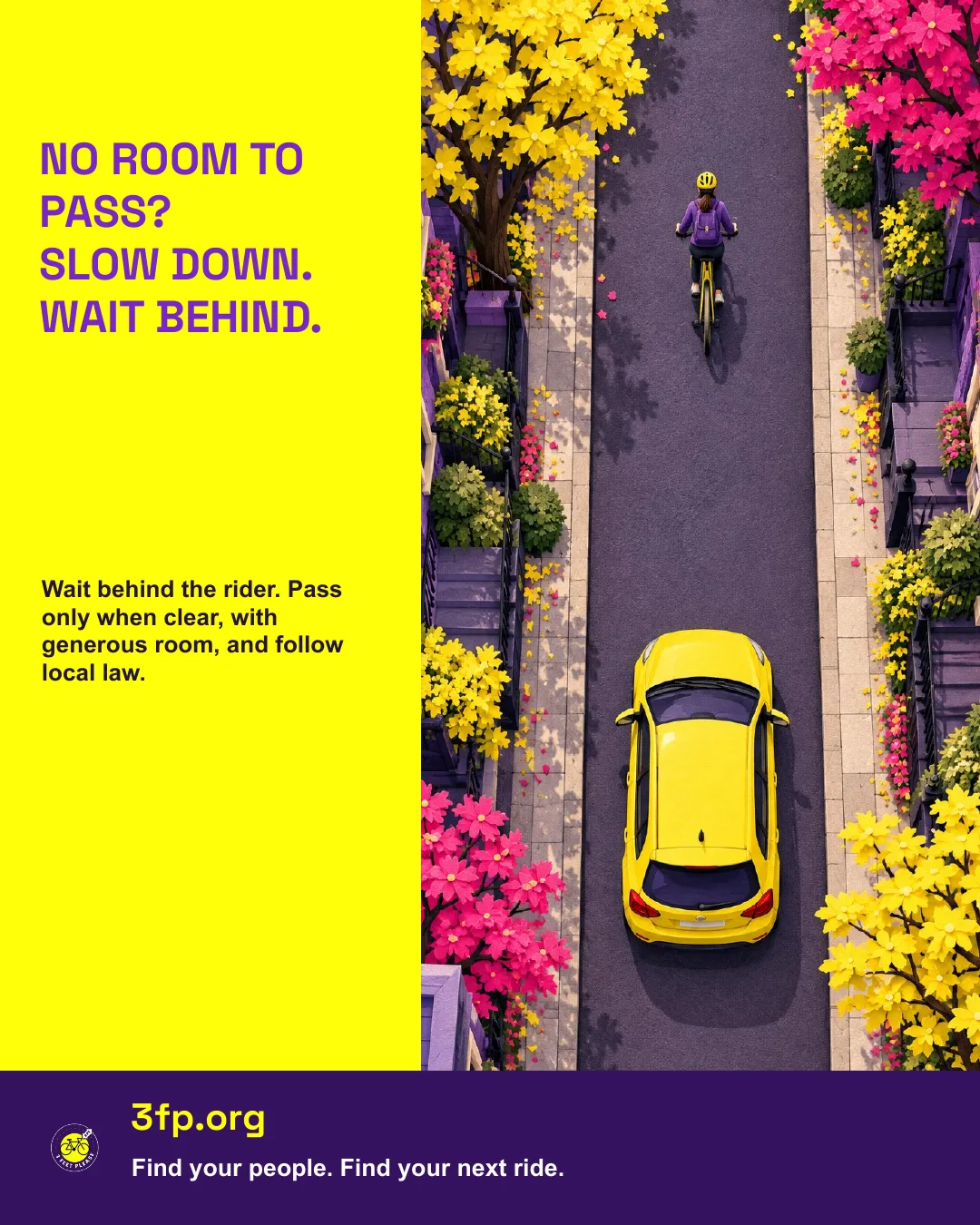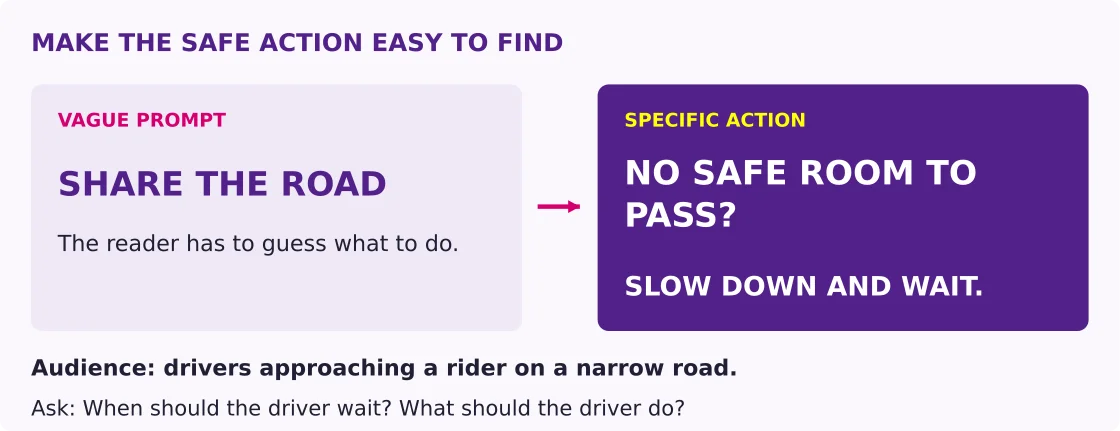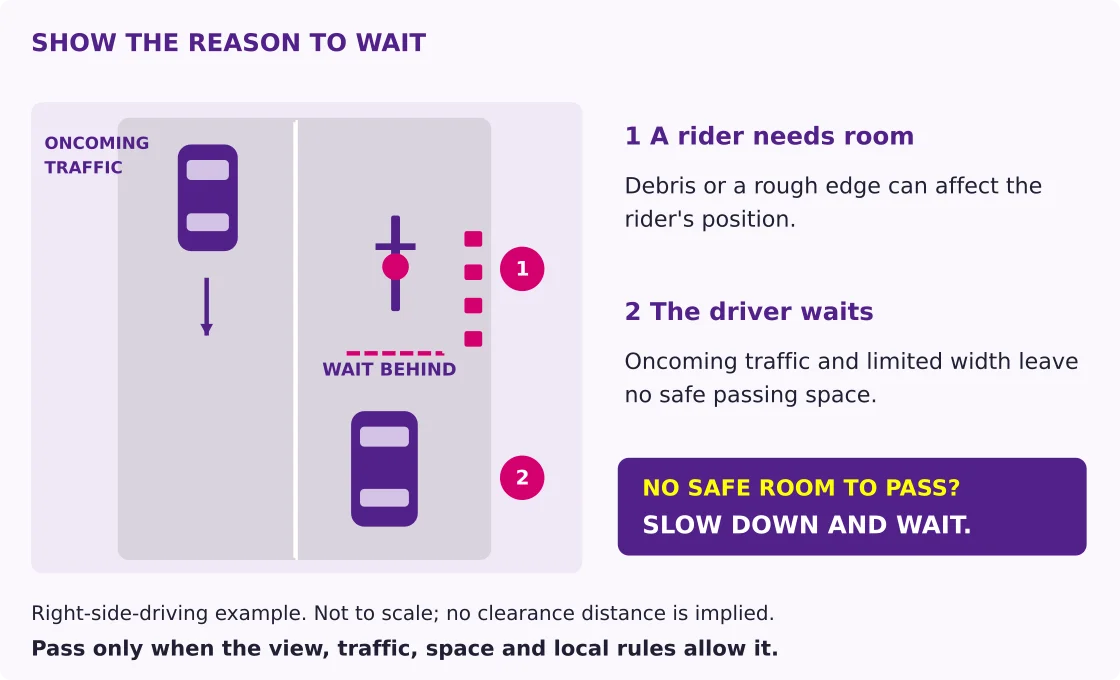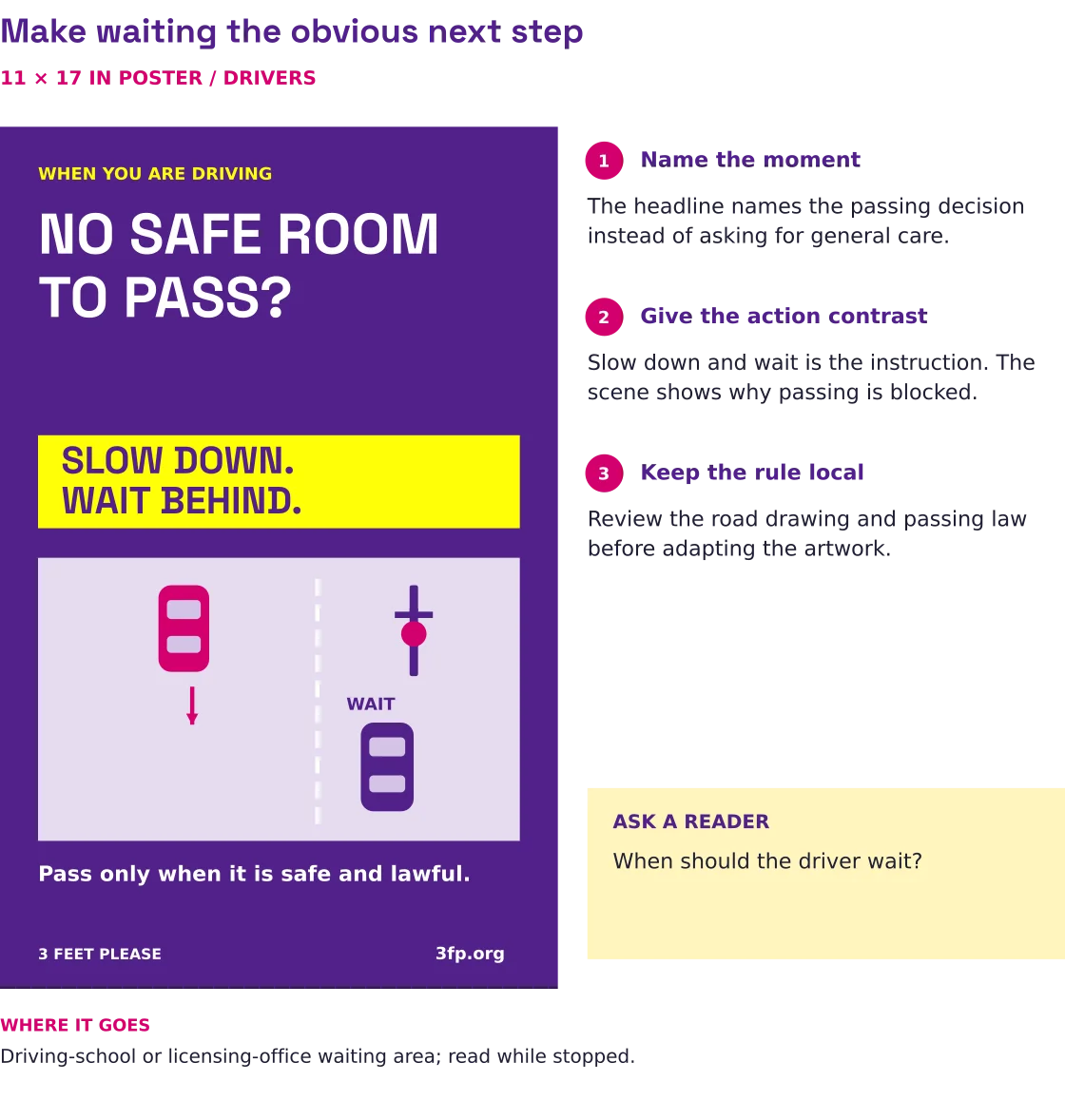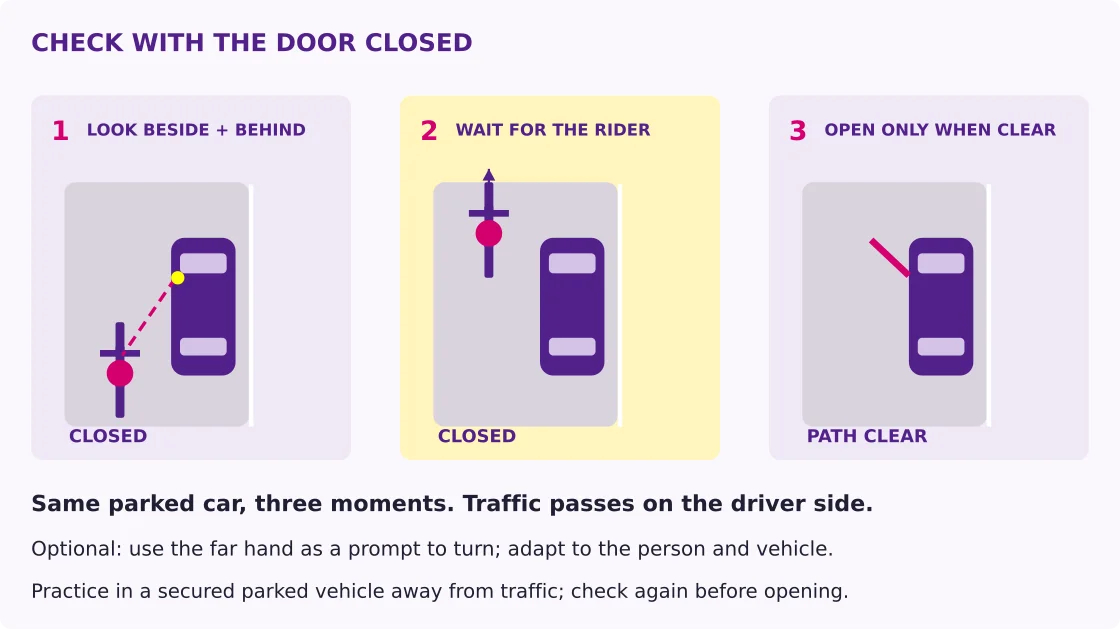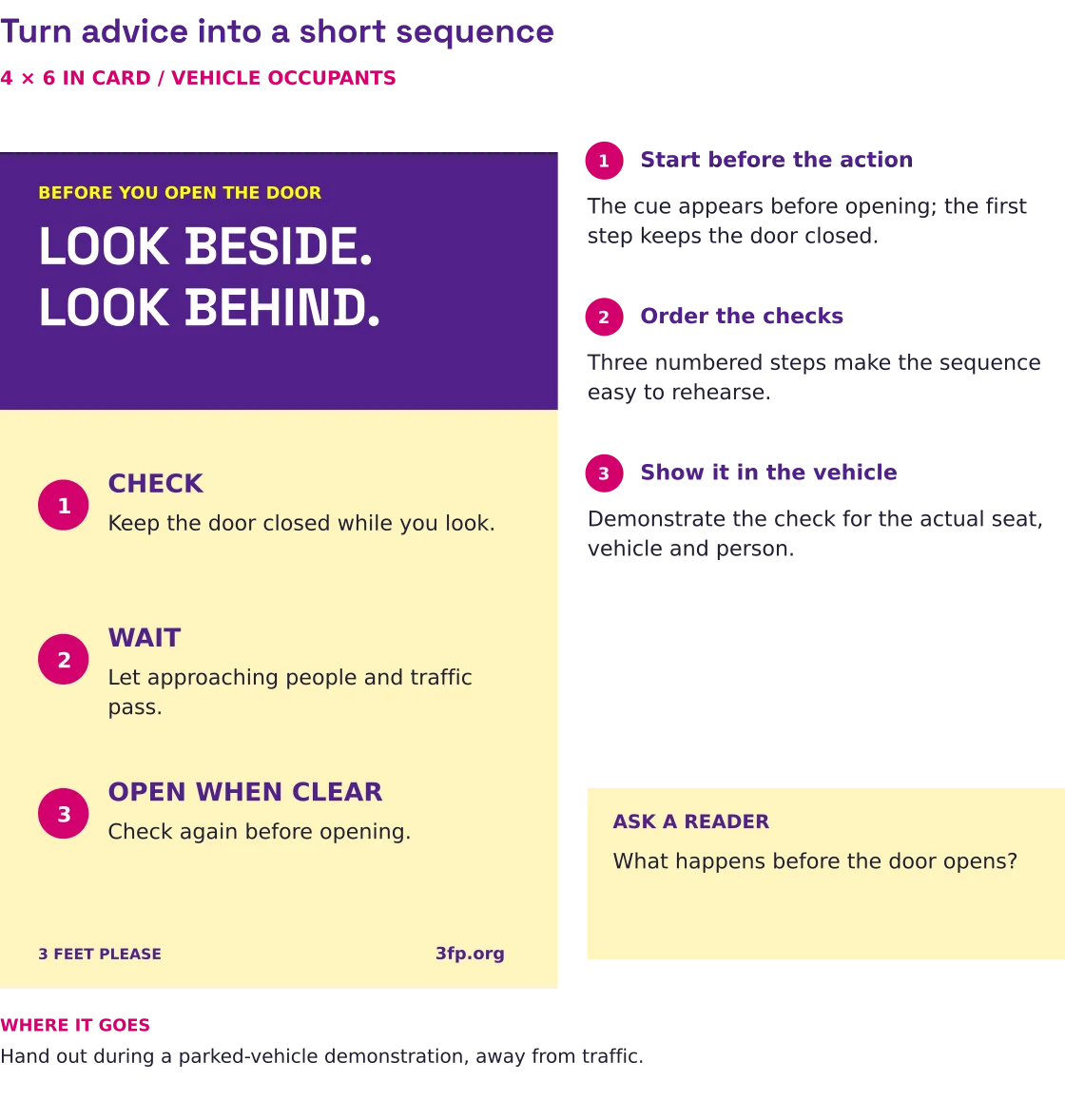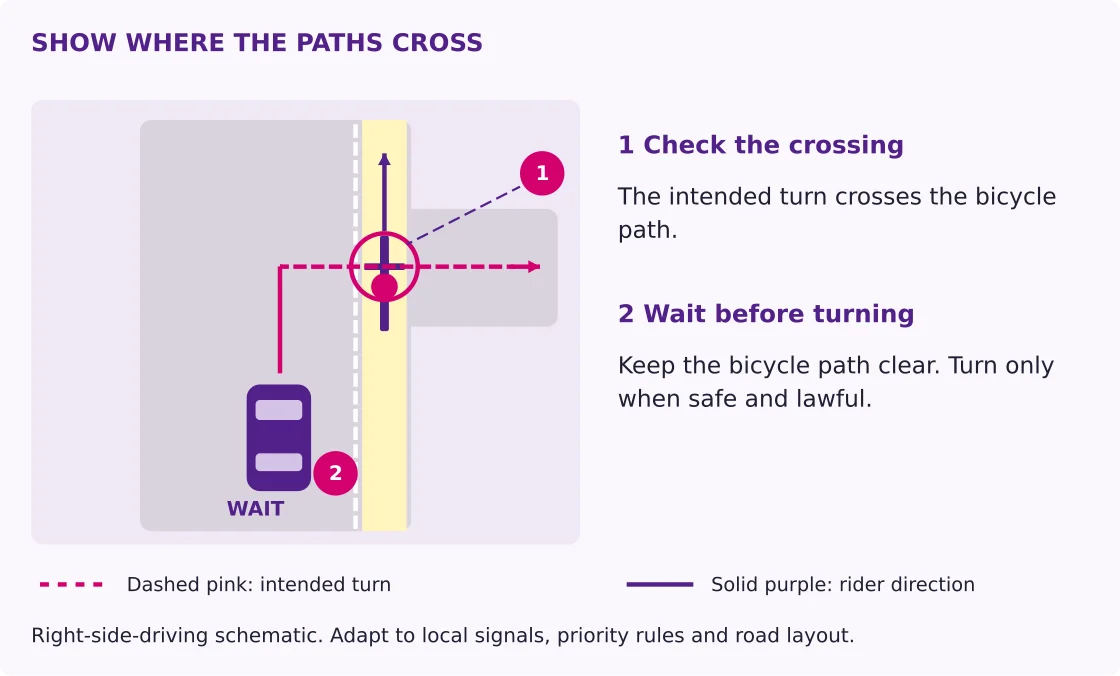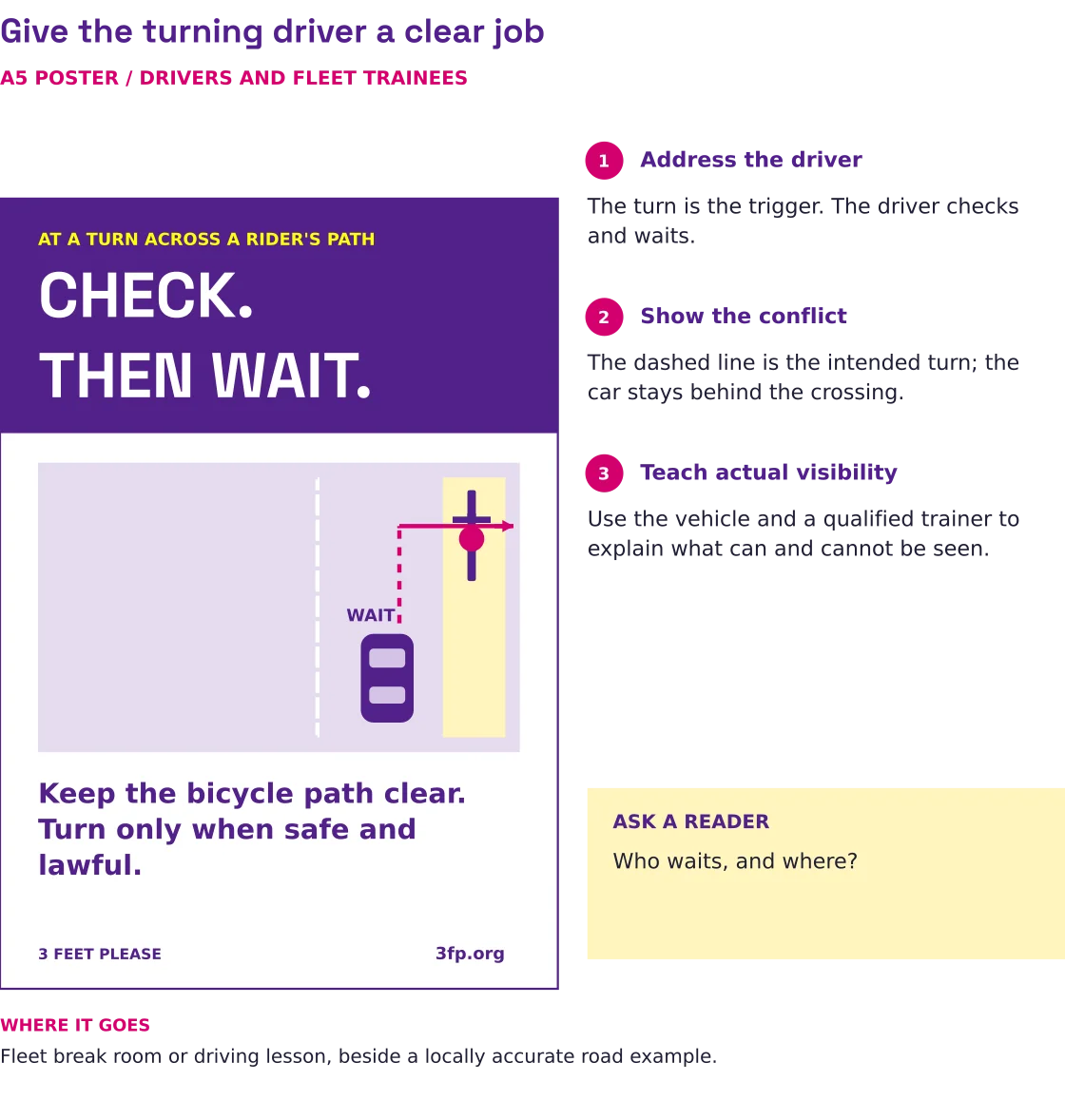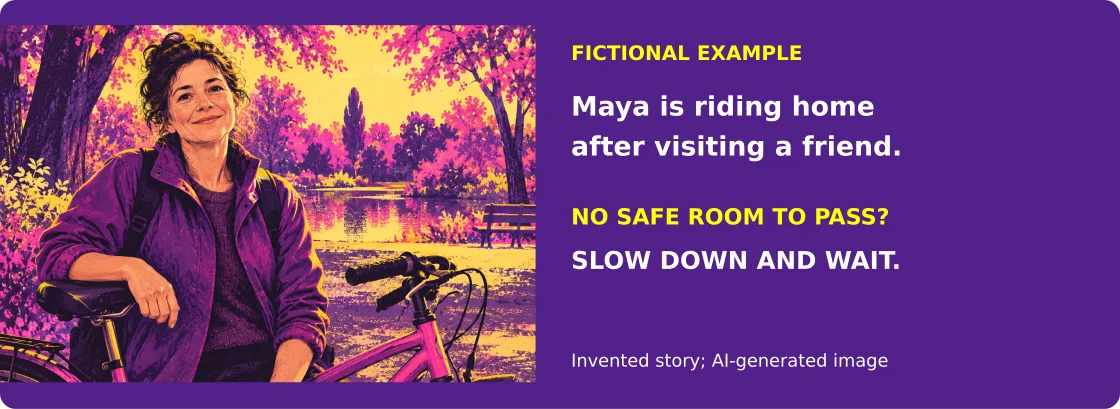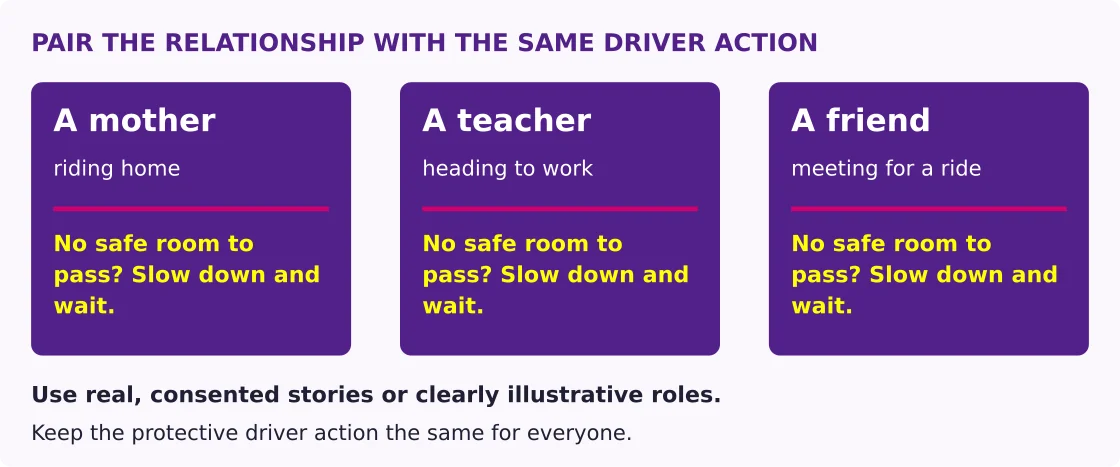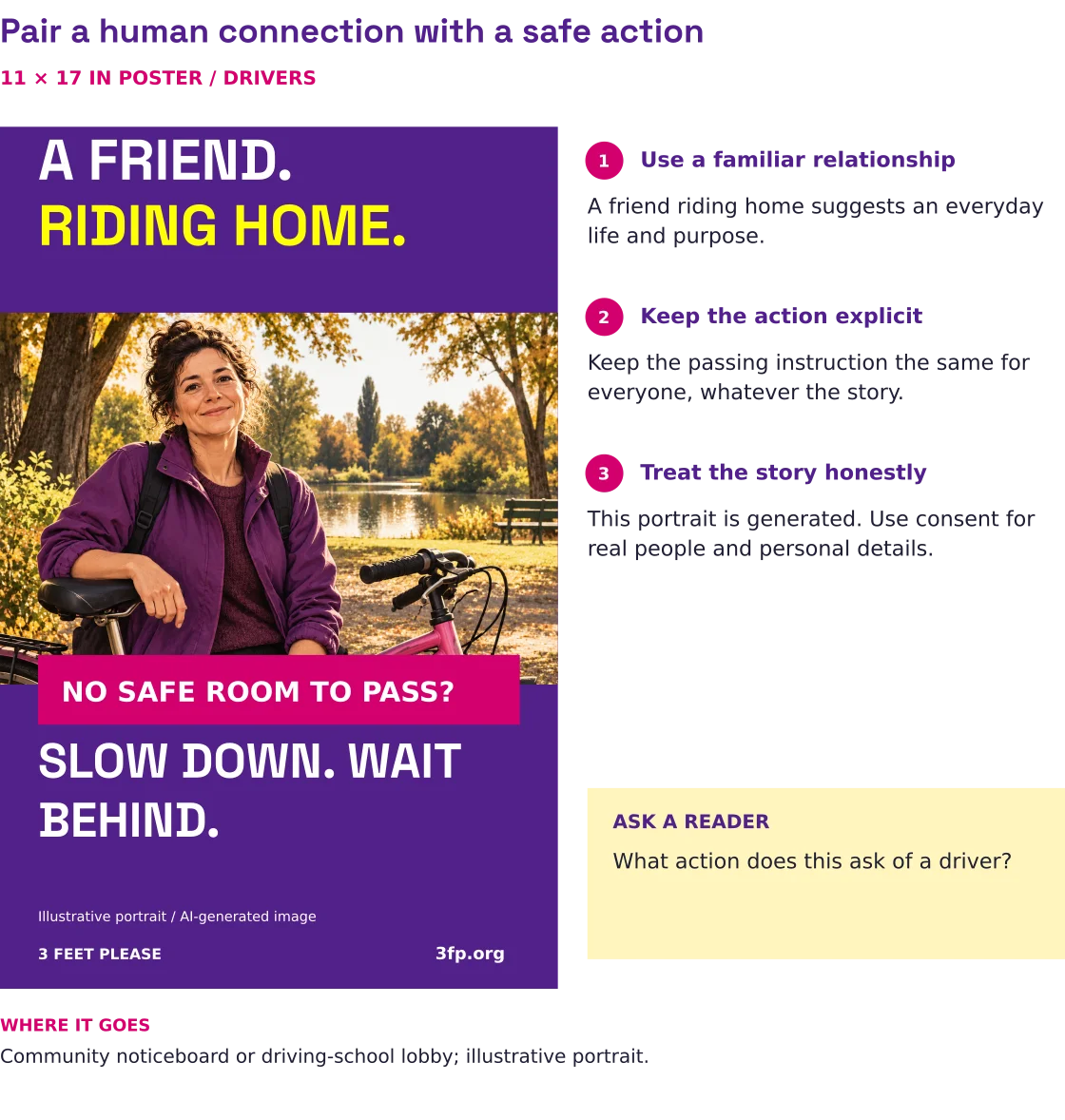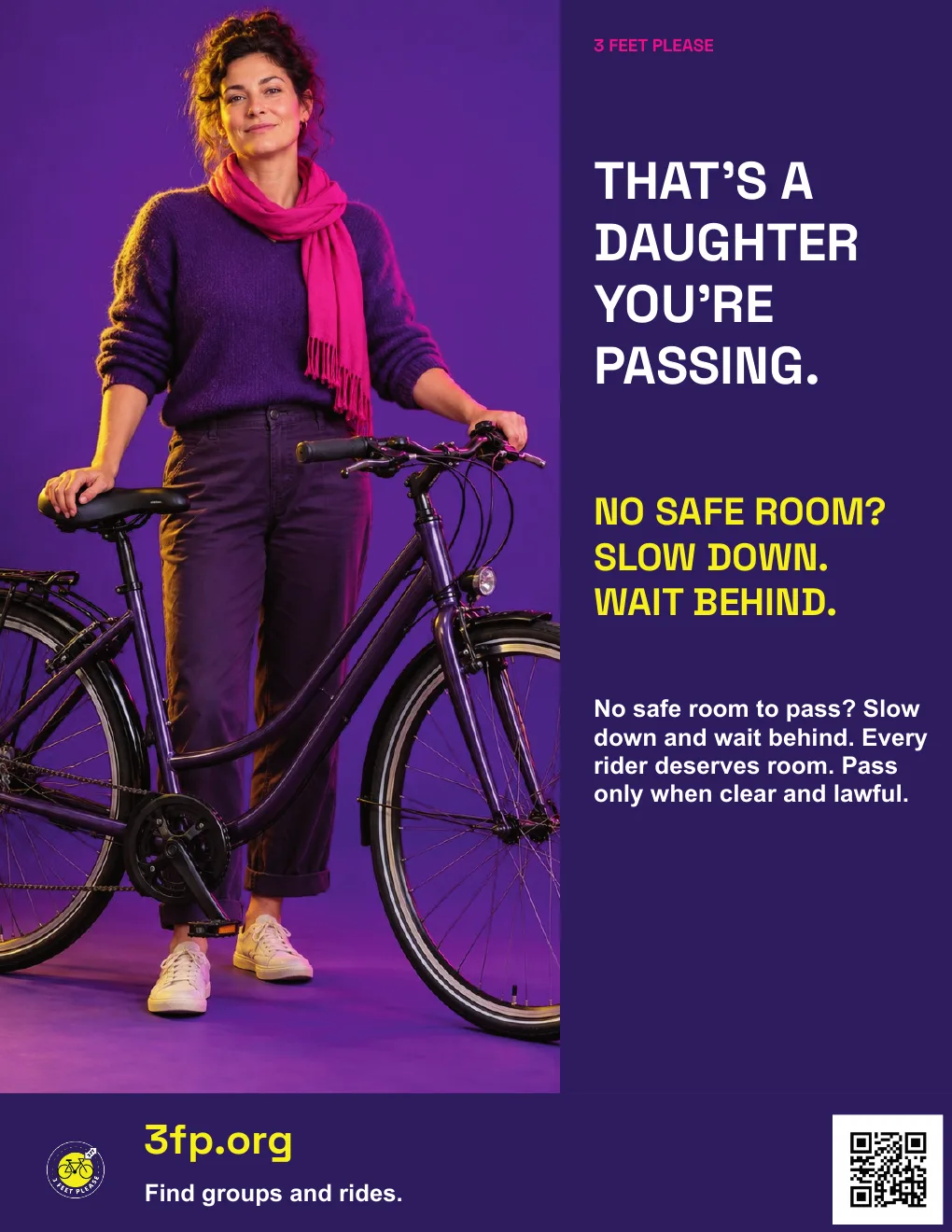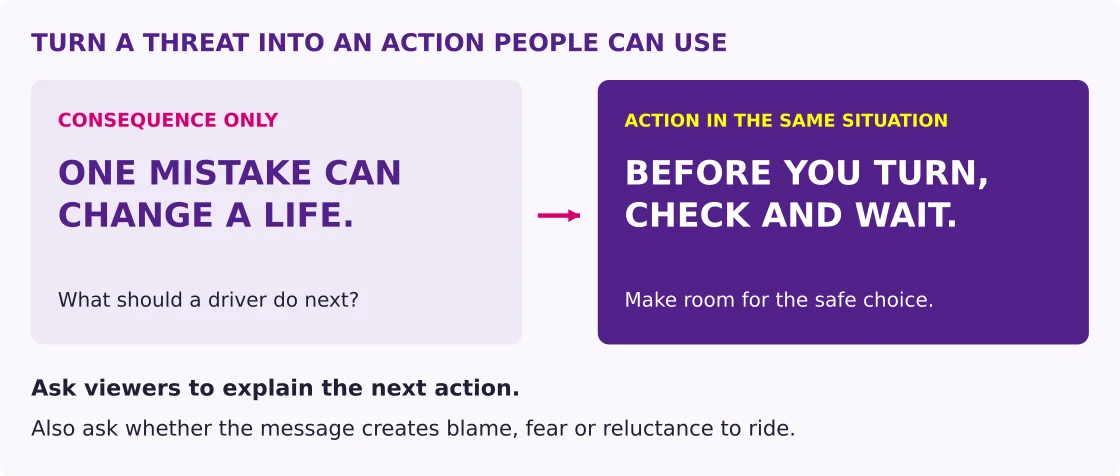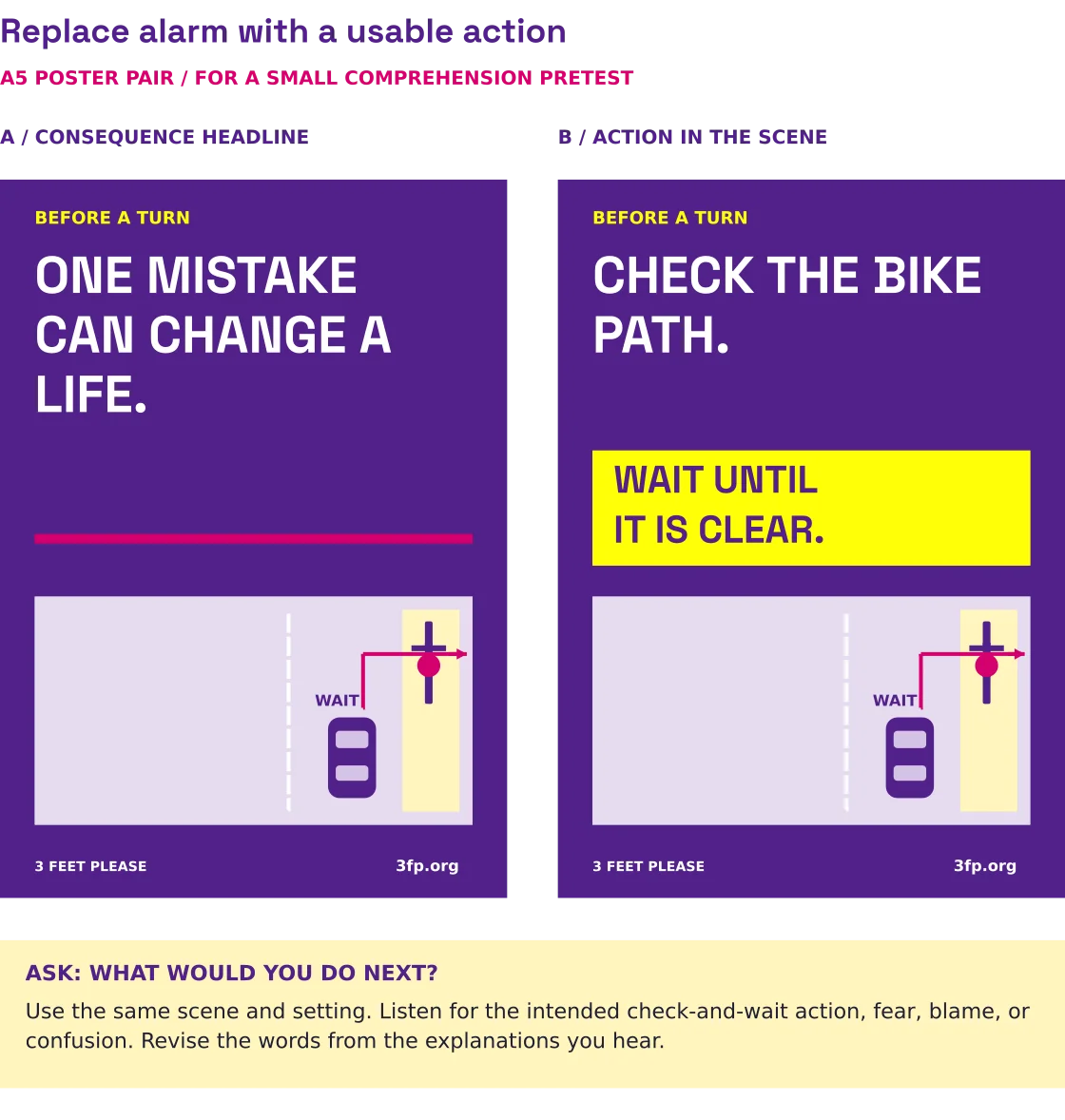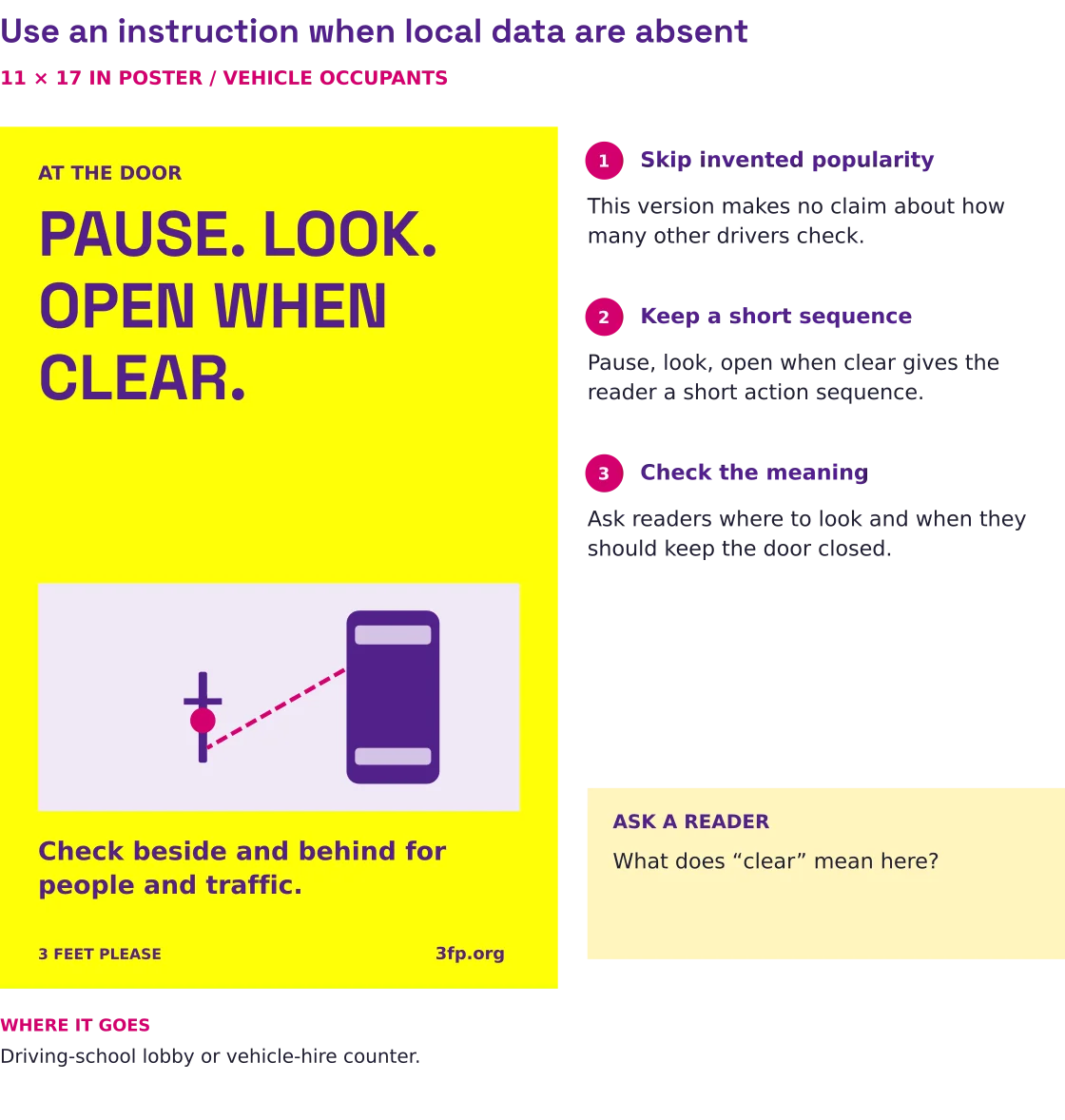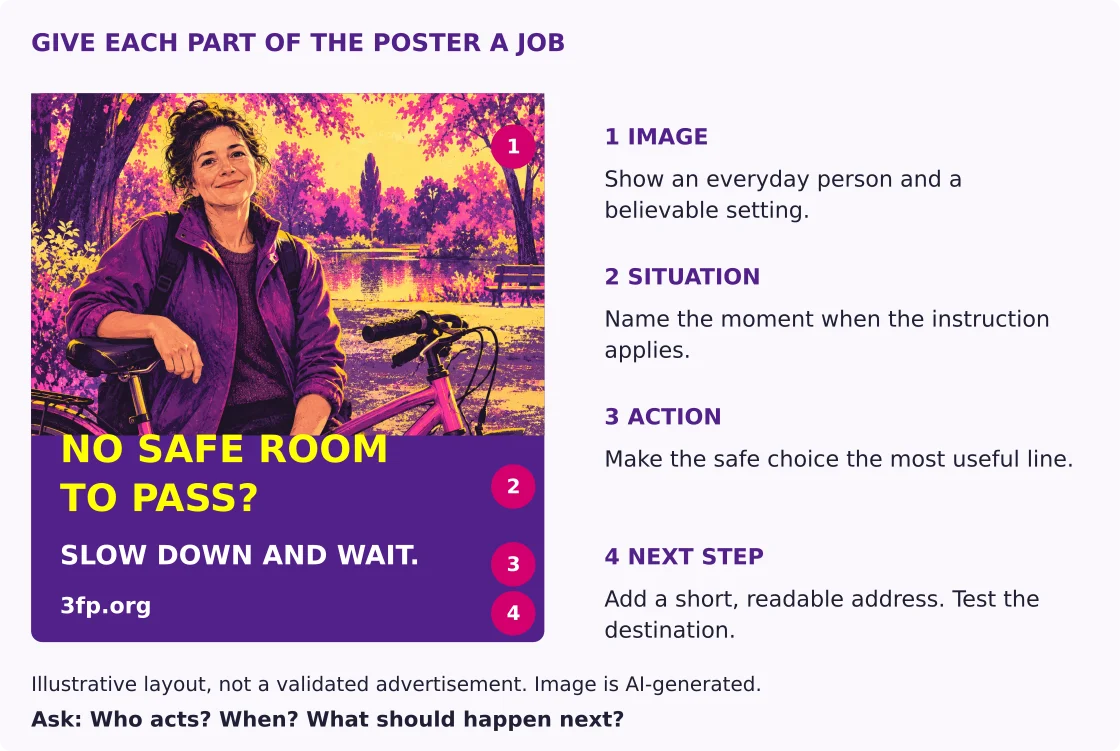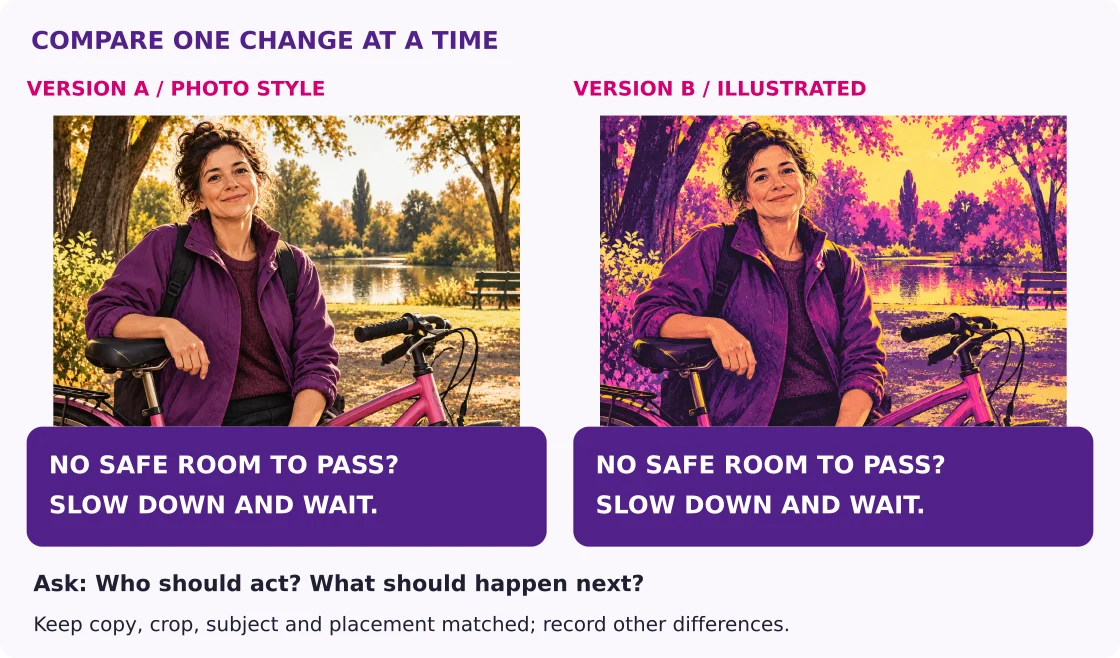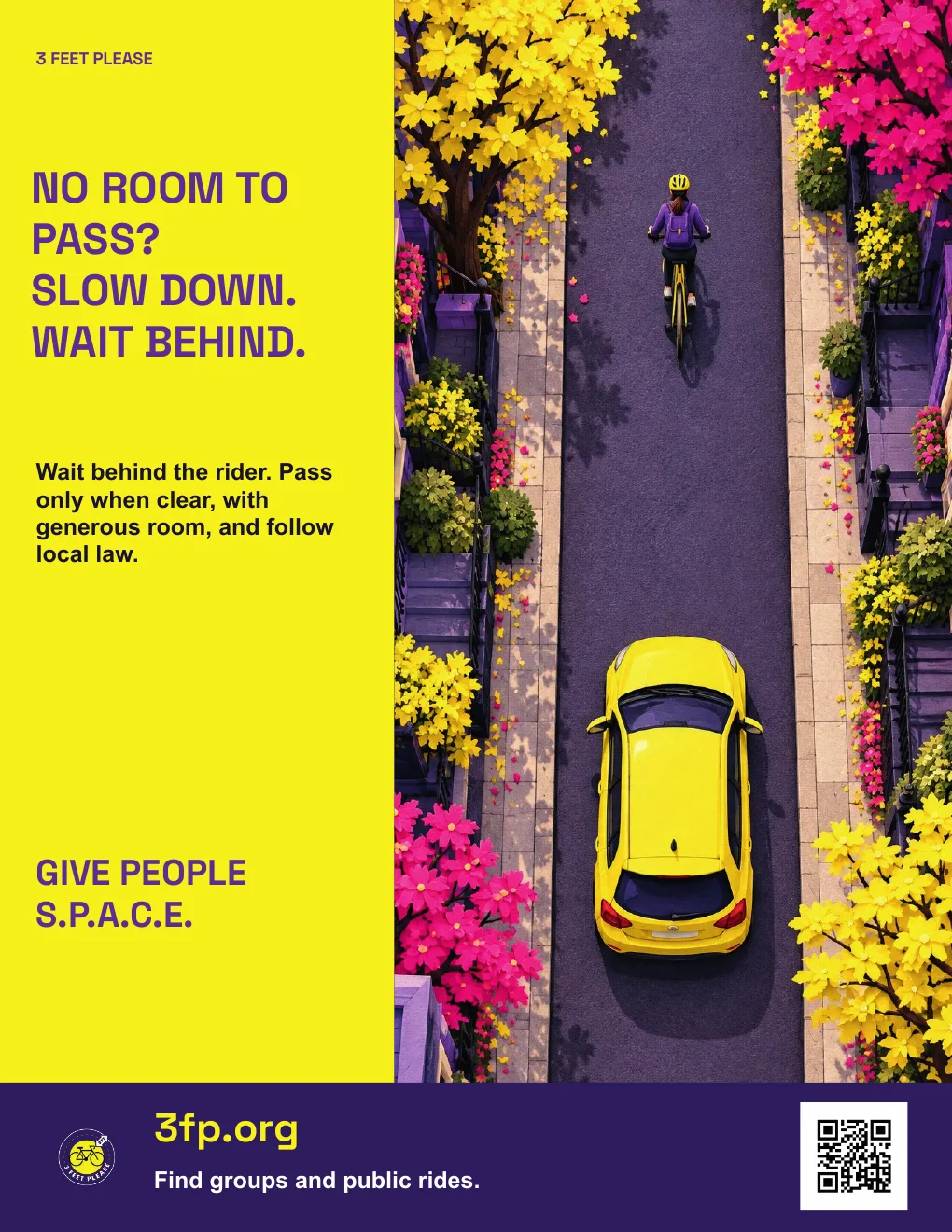
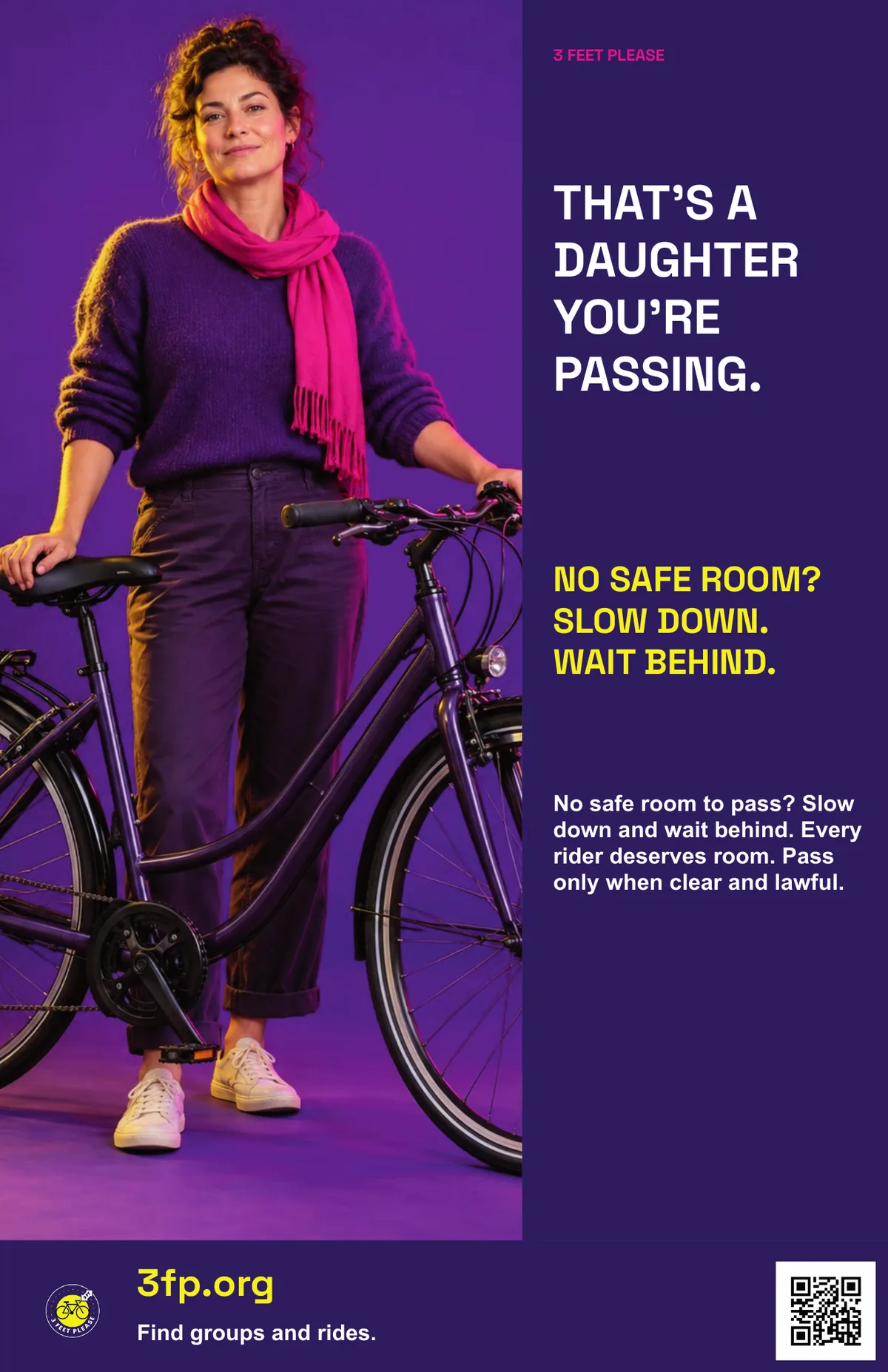
When there is no safe room to pass, slow down and wait behind the rider.
Why this is a useful starting point
Explicit full-lane wording improved survey respondents’ understanding of lane-use rights. Two city programs that combined publicity and enforcement recorded wider passes and fewer under-minimum passes. Pair clear wording with enforcement and teach the local lane-use rule.
Example wording
Lane too narrow to share? The rider may use the full lane. Drivers: wait for room to pass.
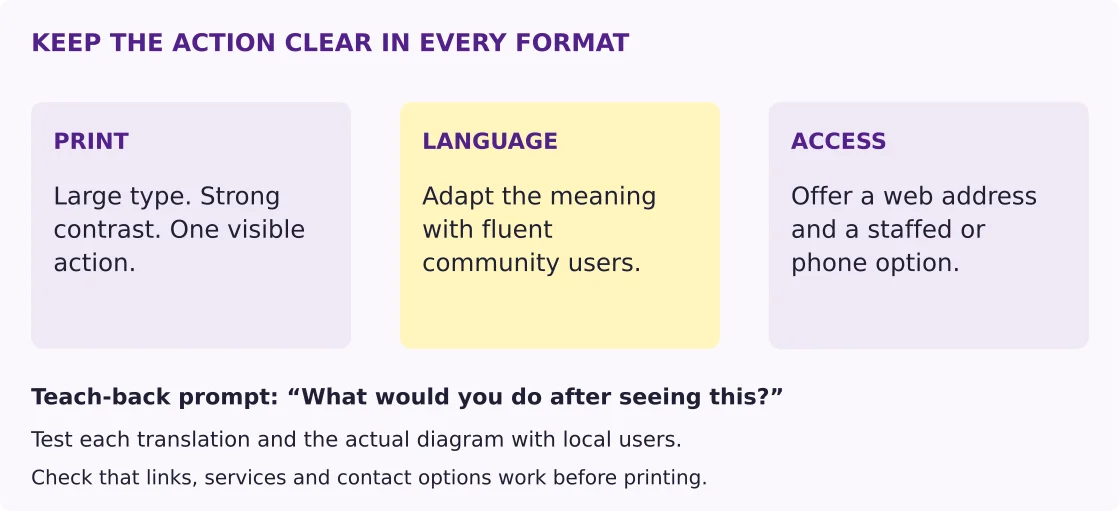
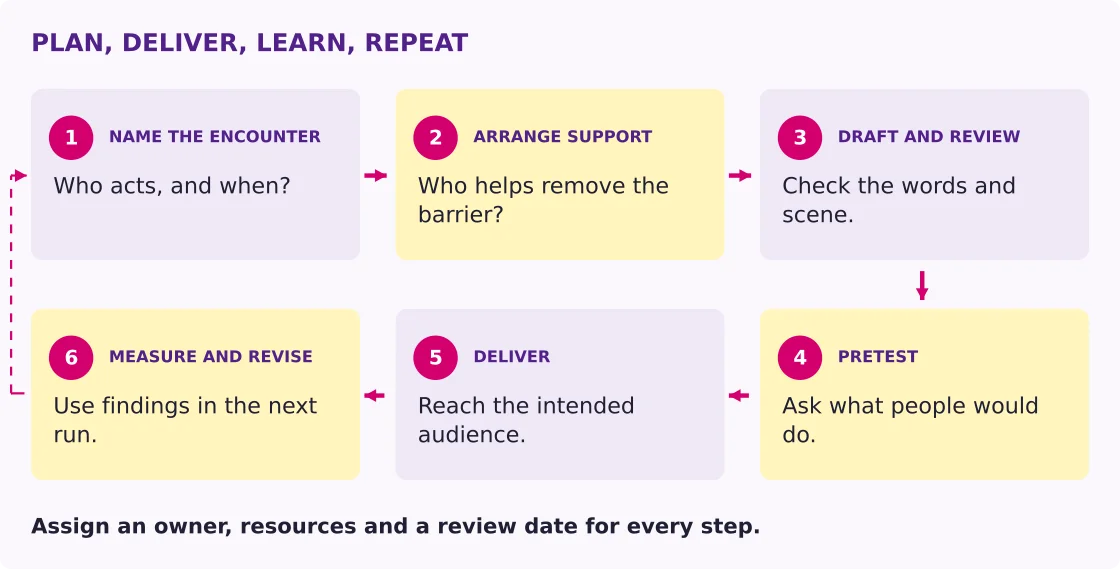
Make the action possible
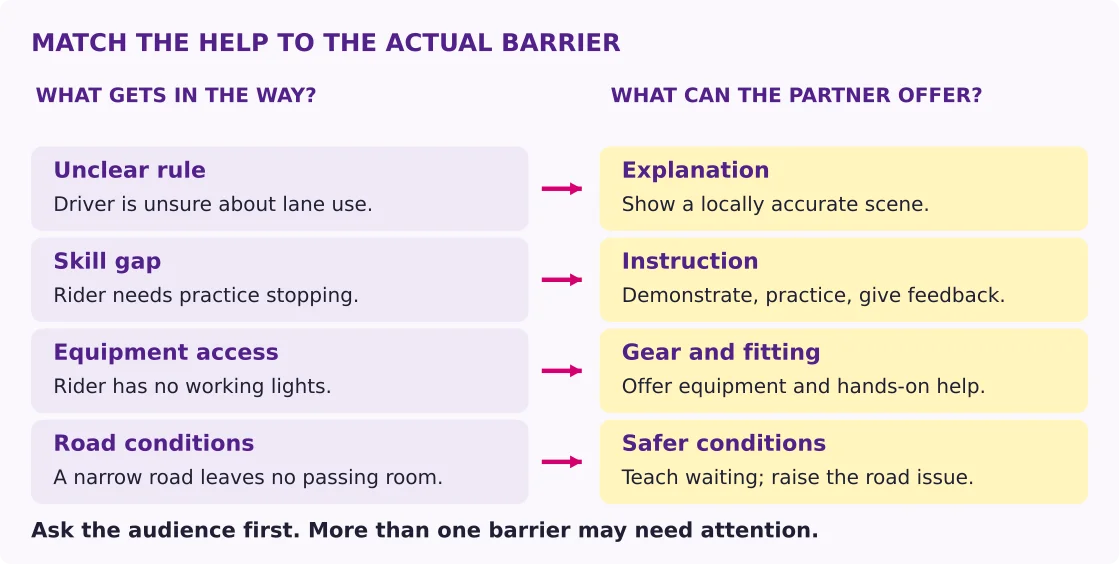
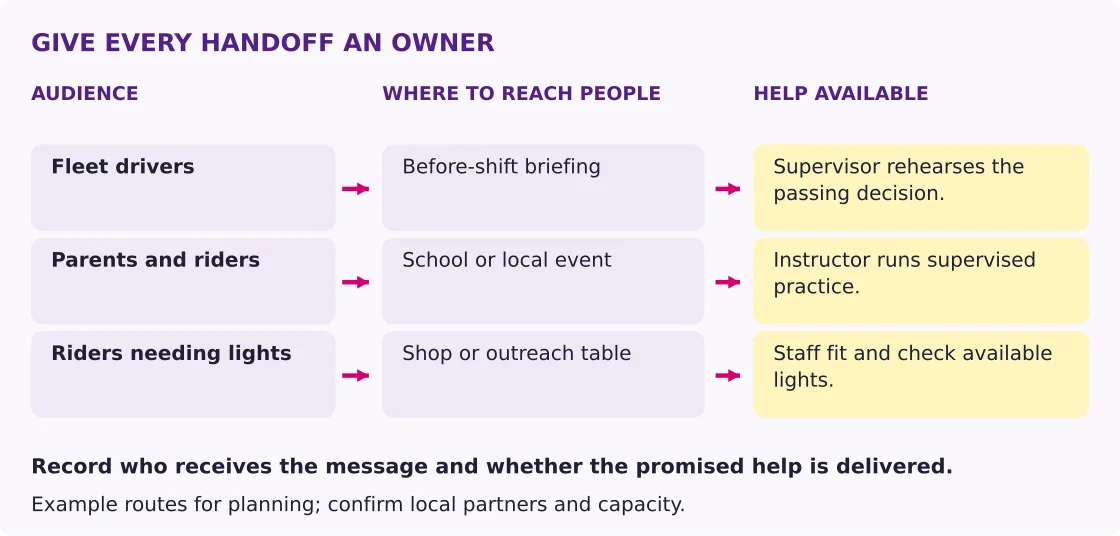
Ask a local road-safety partner or fleet trainer to teach the lane-use decision. Check local passing rules and explain when the rider may need the lane. Continue safer-street design and speed work.
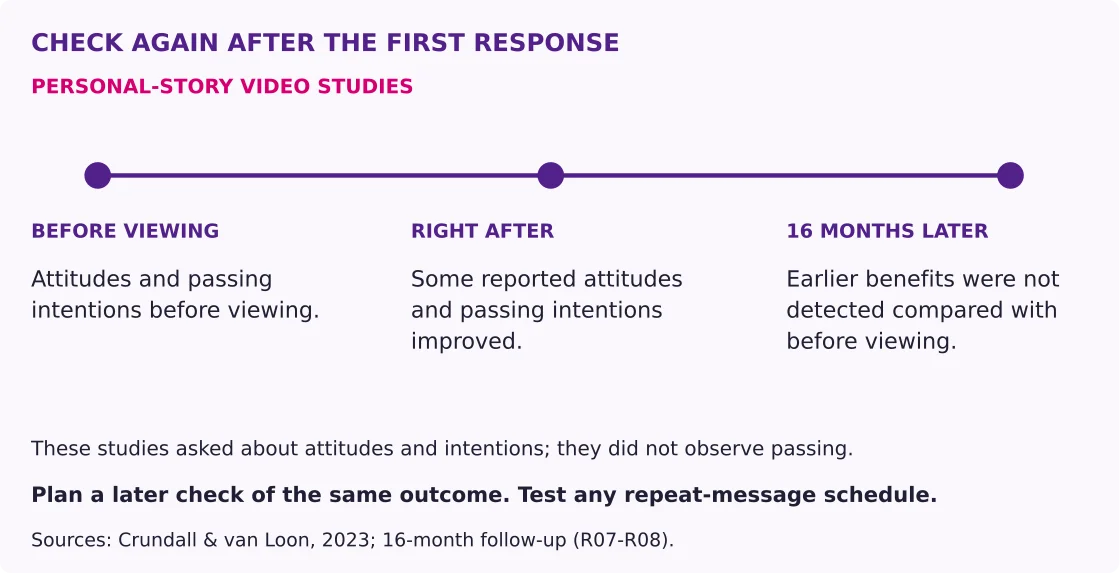
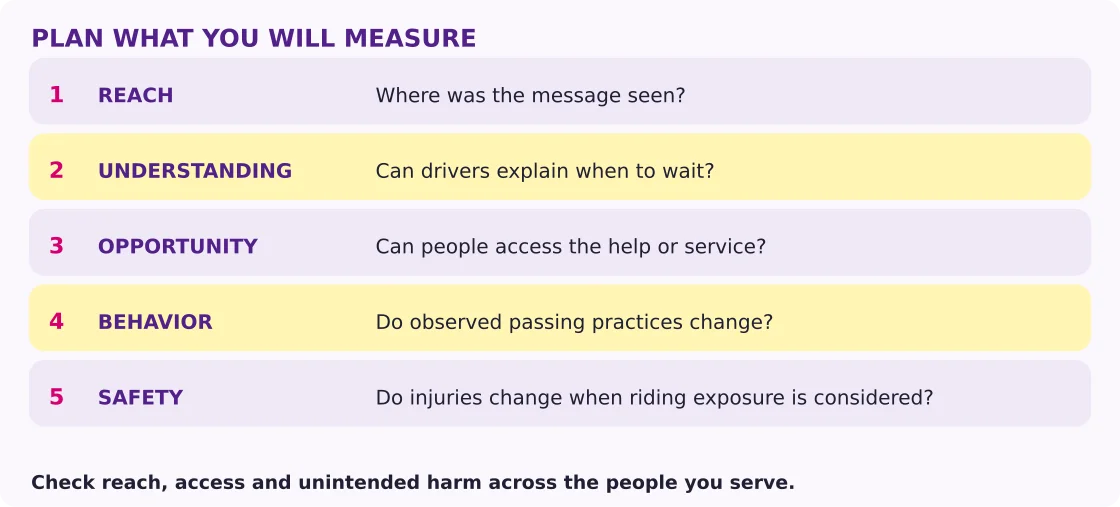
Check whether it works as intended
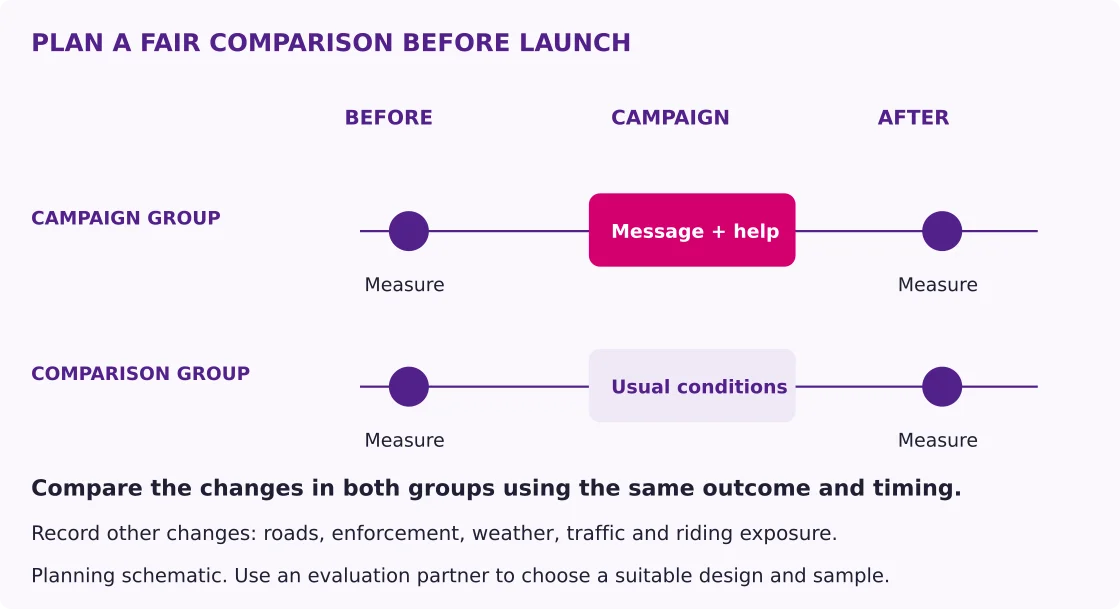
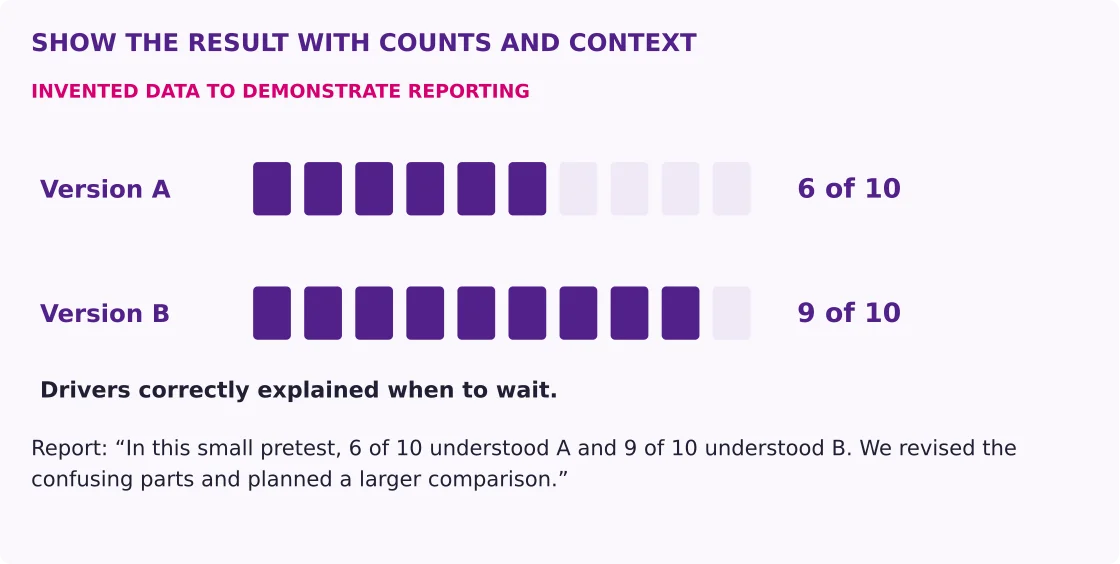
Show drivers a locally accurate narrow-lane scene. Record whether they recognize when a rider may use the lane and when the driver should wait. Where feasible, track passing distance and enforcement timing.
Use each study for the outcome it measured; match your local check to the change you want.